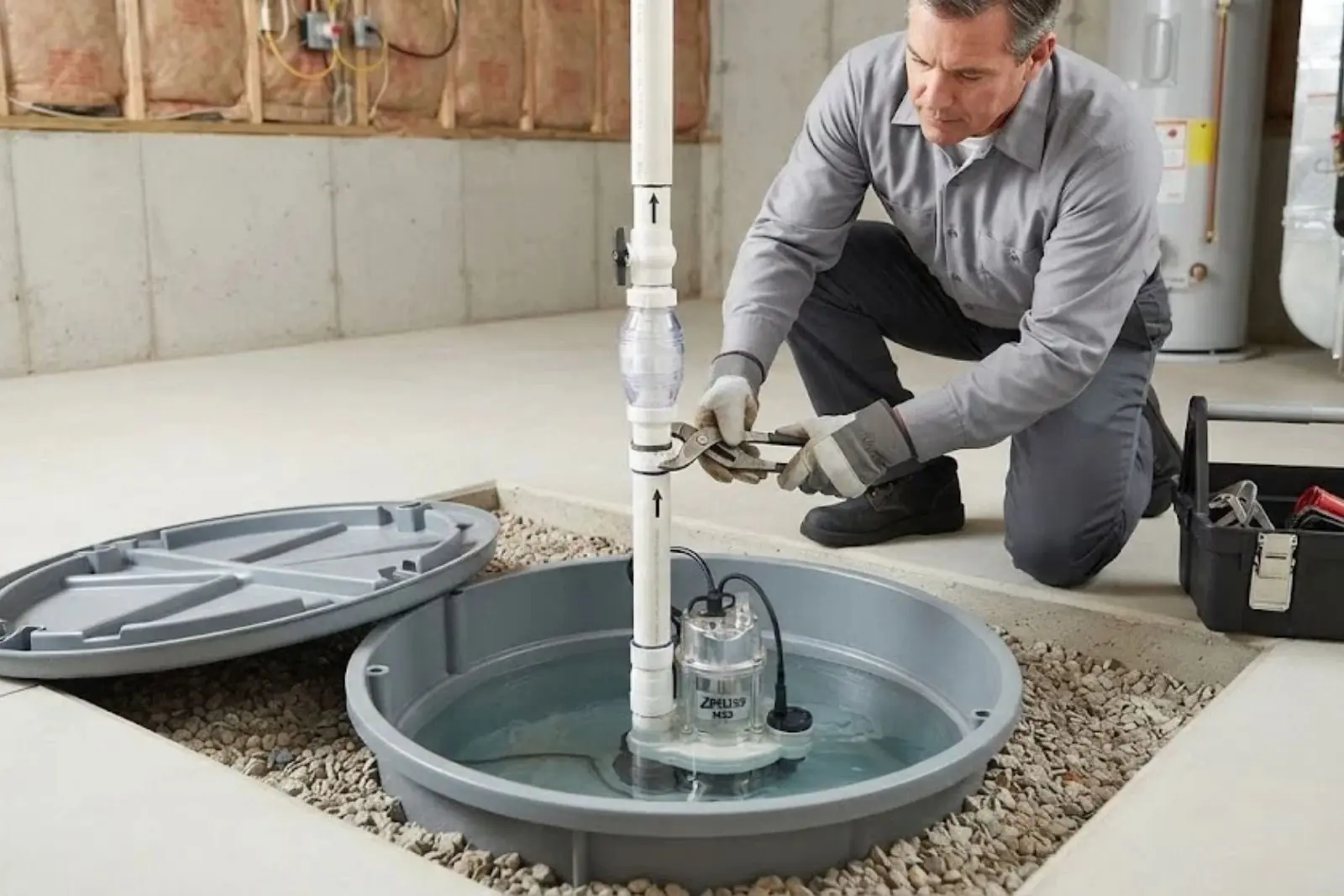
If water is rising in the sump pit or covering the basement floor, call (385) 488-1892. Dispatch is open 24/7, and a plumber can restore pumping or set up a temporary pump the same day. Stay out of standing water near outlets and keep belongings off the floor.
Sump pump repair covers a pump that will not start, one that runs constantly, one that short-cycles, and one that makes noise or pumps nothing. We also check the float switch, the check valve and the discharge line, since a good pump can fail because of a clogged or frozen outlet.
Emergency steps for a flooding basement
Check the power
Is the pump plugged in and is the breaker or GFCI tripped? Reset it only if the area around the outlet is dry.
Lift the float
Gently raise the float. If the pump starts, the switch is the weak part.
Look at the discharge
Make sure the pipe outside is clear and not frozen or buried in snow.
Lift belongings
Move boxes, electronics and furniture off the floor, and take photos for insurance.
Common sump pump problems
| Symptom | Likely cause | Fix |
|---|---|---|
| Pump does not start | No power, a stuck float or a burned motor | Check power, free the float, replace the pump |
| Runs constantly | Stuck float, failed check valve or a high water table | Reset the float, replace the valve, test the discharge |
| Starts and stops quickly | Bad check valve lets water drain back | Replace the check valve |
| Runs but moves little water | Clogged impeller or blocked discharge | Clean the impeller, clear the line |
| Loud grinding | Worn bearings or debris | Replace the pump |
| Pit overflows | Pump undersized or lost power | Add a larger pump and a battery backup |
Backup pumps and power failures
Storms and snow can knock out power exactly when the pit fills. A battery backup pump or a water-powered backup keeps the pit from overflowing during an outage. We can install a backup next to your primary so one failure does not flood the basement.
Pit filling fast?
Call the 24/7 line. We repair or replace the pump on the visit.
Draper snowmelt and storms
Draper sits at the foot of the Wasatch Range, and snow can sit from November to March. Meltwater and spring storms push groundwater and surface runoff toward foundations. Late-summer monsoon storms in July and August can also drop a lot of water quickly. If your basement has taken on water after those events, a pump is only one part of the answer. Grading, window wells and downspouts matter, and basement waterproofing covers the long-term fixes.
Do not discharge a sump line into the sewer. The pipe should run outdoors away from the foundation. Ask the Draper Building Division, (801) 576-6399, about local rules for where the discharge may go. If you hear water running in the wall rather than the pit, leak detection can help.
Maintenance that prevents a flood
A yearly sump pump checklist
- Pour a bucket of water into the pit and watch the pump start and stop.
- Clean the pit of silt, gravel and debris.
- Check that the discharge line drains away from the house and is not blocked.
- Test the backup battery and replace it every few years.
- Replace a pump that is more than about ten years old before storm season.
What changes the price of sump pump repair
Many homeowner policies exclude groundwater and sump failure unless you added a water backup endorsement. Ask your agent before the storm. Want your real number? Call (385) 488-1892.
Sources and standards behind this page
Where a sump discharges is a local rule question, so we point you to the Draper Building Division. Plumbing connections to a pump pit follow the International Plumbing Code (IPC) as amended by the Utah State Construction Code in Utah Code Title 15A. Seasonal timing notes draw on Draper's snow season and WaterPro's published irrigation dates.
Straight Answers
Yes. Call (385) 488-1892 any hour. A plumber can restore pumping or set up a temporary pump to protect the basement.
Pour a bucket of water into the pit. The pump should start, empty the water and shut off. If it does not, call us.
Commonly around ten years, less with heavy use. Replace an older pump before storm season.
A stuck float, a failed check valve or a high water table can keep it running. Snowmelt and irrigation can raise groundwater.
If your basement is finished or your pit fills during storms, yes. A backup keeps the pit from overflowing during a power outage.
Outdoors, away from the foundation, and not into the sewer. Ask the Draper Building Division about local rules.