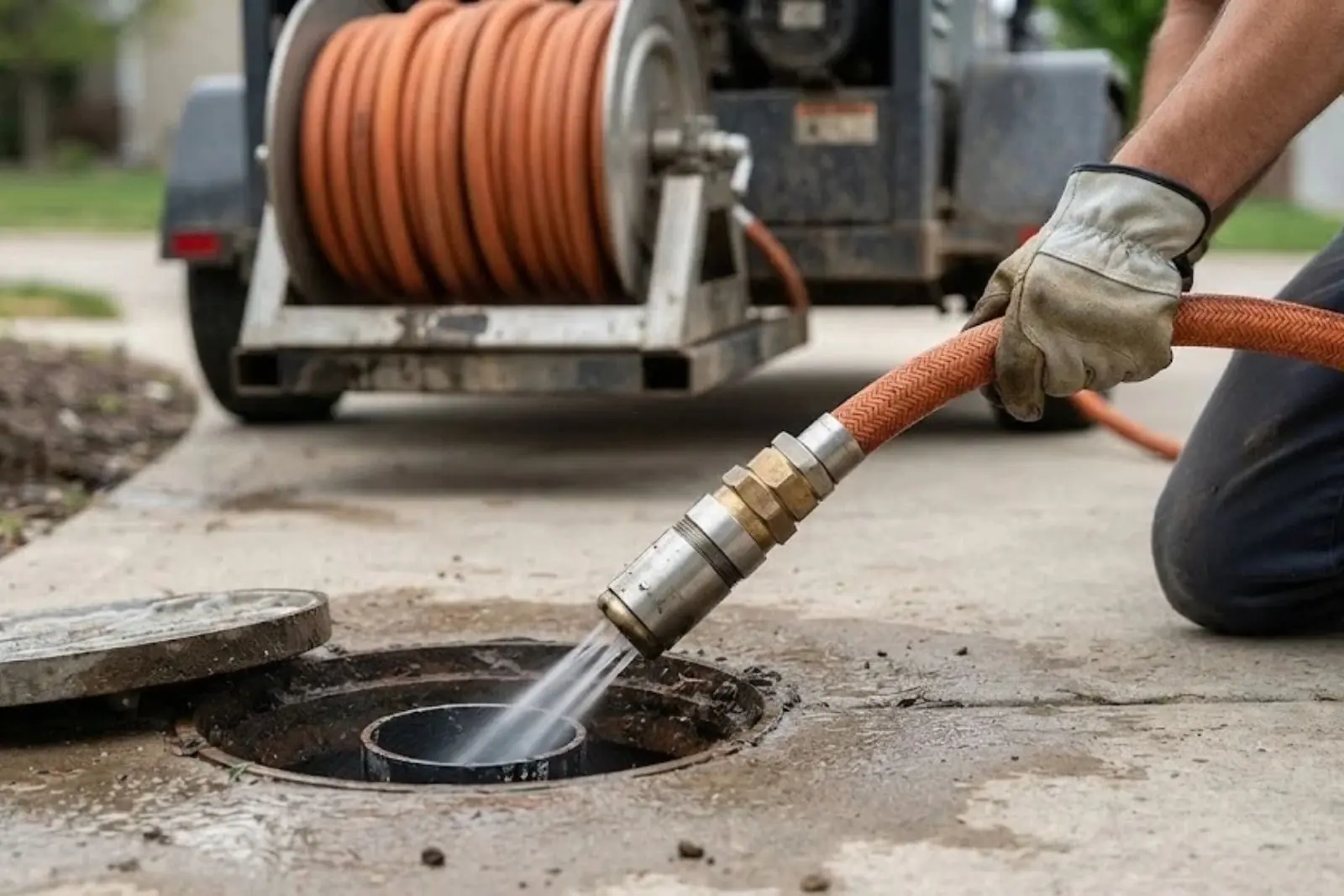
Hydro jetting sends water through a hose and nozzle at high pressure to scour grease, scale and root fibers off the inside of a pipe. If a line backs up again and again, or the main has stopped draining completely, call (385) 488-1892. The 24/7 line is open now, and while you wait you should stop using water in the house so the line has a chance to settle.
Plenty of lines only need a cable. Jetting earns its place when the blockage is a coating, not a plug. A cable leaves the wall stained with whatever caused the clog, and the pipe narrows a little more each time.
Sewer backup: what to do first
Stop adding water
No showers, laundry or dishwasher runs until the line is open. Flushing a toilet into a blocked main only pushes more water toward the lowest drain.
Keep people and pets out
Floor-drain backups carry waste water. Keep children and animals out of the area and wear boots if you must walk through it.
Shut off power in wet areas
If water reaches outlets or a furnace in the basement, turn the breaker off only if you can reach the panel without stepping through water.
Take photos
Pictures of the water line and affected items help later if you file an insurance claim.
After-hours jetting is possible for active backups. A same-day visit is common when you call before the afternoon, and the first step is always a camera so we do not jet a pipe that is already broken.
Jetting or cabling: how to choose
Cable machine
- Best for a plug of hair, paper or a small root mass
- Fast on a single branch line
- Leaves a ring of residue on the pipe wall
- Lower cost for a first-time clog
Hydro jetting
- Best for grease, scale and root fibers coating the wall
- Restores close to the full pipe diameter
- Needs a camera look first to confirm the pipe is sound
- Fits lines that clog again within weeks
What jetting does not fix
High pressure water is hard on a pipe that is already failing. A cracked clay line, an offset joint or an old cast iron pipe with a rotted bottom can break open under a jet. That is why we inspect first with a camera. See sewer camera inspection for what the camera shows. If the camera finds a break, the next step is sewer line repair, not more water.
Roots, irrigation season and your lateral
WaterPro, which runs Draper's secondary irrigation water, typically turns it on by April 15 and off around October 15. Yard watering feeds tree roots, and roots look for moisture and nutrients at pipe joints. A line that was fine in March can show root fibers by midsummer, and the cutting head on a jetter clears them from the joint.
South Valley Sewer District serves Draper, Riverton and nearby cities. Its crews work on the district main. The pipe from your house to that main is often your own responsibility, so ask the district at (801) 571-1166 where its work ends before you hire a repair.
How a hydro jetting visit runs
Camera first
We run a camera through the cleanout to find the blockage and check the pipe wall.
Set the nozzle
The tech picks a nozzle for the job, a forward cutter for roots or a rotating head for grease.
Jet and pull back
Water scours the pipe as the nozzle is drawn back toward the cleanout, flushing debris out with it.
Second camera pass
We look again to confirm the pipe is clean and show you the result.
Same backup three times this year?
Call for a camera visit and a jetting plan. Dispatch answers all night.
Restaurants, shops and multifamily lines
Food businesses in Draper send grease down the same drains all day. Fats cool in the line, build a layer and catch everything behind them. Jetting on a schedule keeps that layer from closing the pipe. If you manage a restaurant or a multi-unit building, see commercial plumbing for after-hours work and sewer line cleaning for a main line job.
What changes the price of hydro jetting
Jetting is a maintenance and cleaning service. Insurance usually does not cover cleaning a line that clogged from buildup. Want your real number? Call (385) 488-1892 and we will tell you the price before any work starts.
Sources and standards behind this page
Camera-first jetting is a field practice, not a code requirement. The plumbing around it, including cleanouts and sewer connections, falls under the International Plumbing Code (IPC) as amended by the Utah State Construction Code in Utah Code Title 15A. Irrigation dates come from WaterPro, and sewer contacts from South Valley Sewer District.
Straight Answers
Yes. The 24/7 line at (385) 488-1892 takes calls at any hour. For an active backup we send a plumber, usually start with a cable or a camera, and move to jetting when the pipe checks out and the blockage is a coating.
On a sound pipe, yes. We run a camera first to look for cracks, offsets and collapsed sections, because a jet can worsen a pipe that is already failing. If the camera finds damage, we explain the repair options instead.
A snake or cable pokes through the middle of a clog. A jet washes the whole pipe wall. Lines that clog again within weeks usually need the jet.
Only when the line needs it. A clean residential line may never need jetting. A line with a history of grease or root backups may benefit from a camera check every year or two, and the camera tells you whether another cleaning is due.
It clears root fibers and small mats from the pipe and joints. A thick root mass may need a cutting head on a cable first. Roots grow back unless the joint they entered is repaired, so a camera follow-up matters.
Often yes, after the camera shows the pipe is sound. Old cast iron can have scale that jets well and a rotted bottom that does not. The camera shows which you have.