A blocked main sewer line is an emergency because the waste has nowhere else to go. If water is rising in a tub or a floor drain, stop using water and call (385) 488-1892. The 24/7 line answers at night and on weekends, and a plumber with a main line cable machine can usually be on the way the same day.
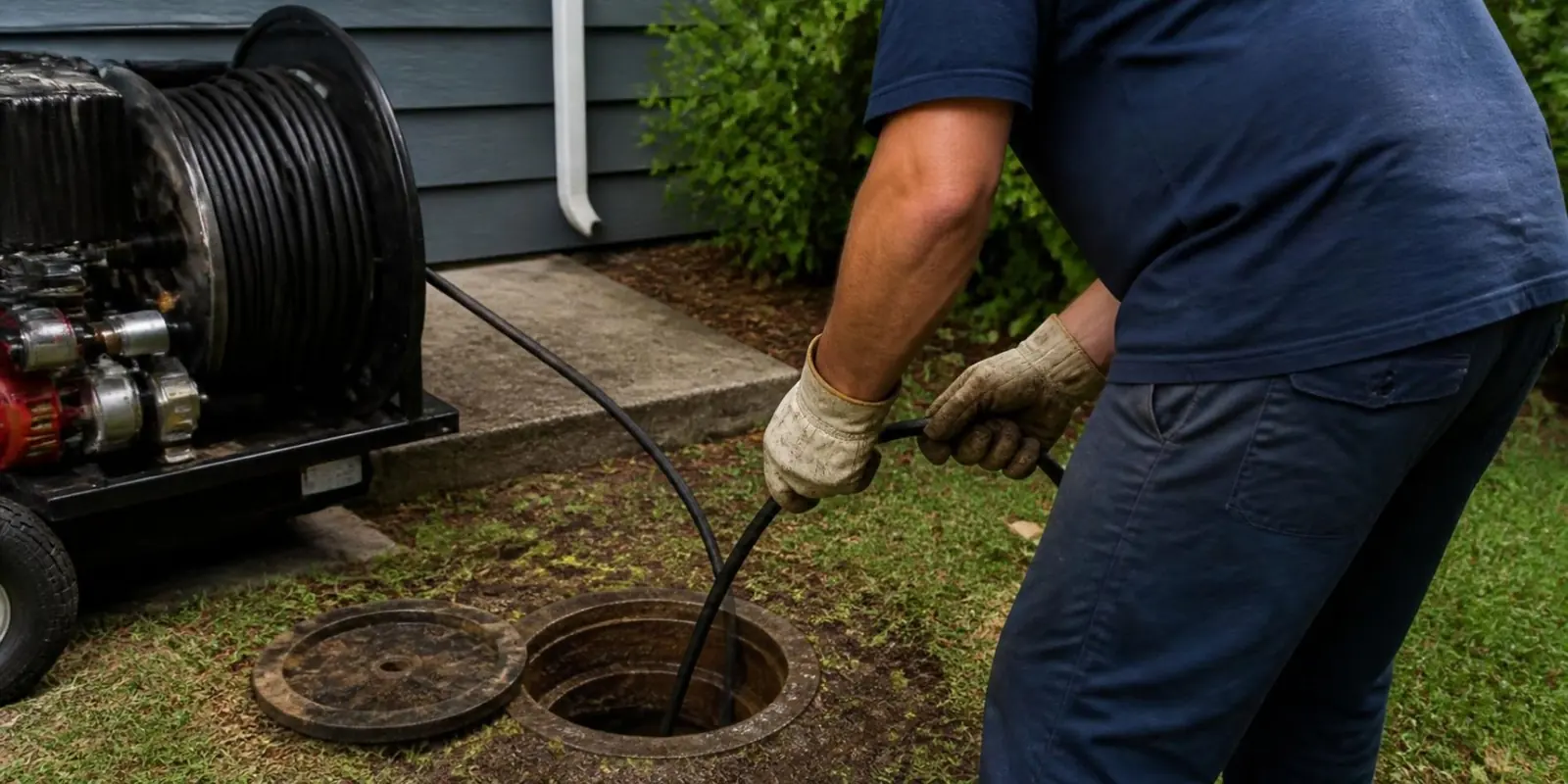
Sewer line cleaning means clearing the pipe that carries everything from your house to the sewer main. A cable with a cutting head is the first tool. When roots or grease keep coming back we add a camera and, if the pipe is sound, hydro jetting.
Signs the blockage is in the main line
Gurgling in the lowest tub
Air pushed ahead of rising water bubbles out of the drain closest to the floor.
Every fixture is slow
A single trap clog affects one sink. A main blockage slows the toilet, tub, sink and washer together.
Sewage smell near a floor drain
A floor drain in a basement or garage can smell before it overflows.
Toilet flush raises water elsewhere
Flush upstairs and watch the basement tub. If it rises, the shared line is blocked.
What to do before the plumber gets there
- Stop all water use, including the washer, dishwasher and showers.
- Find the main cleanout. It is usually a capped pipe at the foundation, in the garage or in the basement.
- Move rugs and boxes away from low drains.
- Do not pour chemical cleaner into the line. It rarely clears a main blockage and it is hazardous to the plumber.
- Check whether neighbors have the same problem. If they do, the sewer district may need a call.
District main or your lateral?
South Valley Sewer District serves Draper, Riverton, Bluffdale, South Jordan, Herriman and the southern part of Sandy, and its main office number is (801) 571-1166. The Draper City website suggests using its Utility Services App to find your sewer provider. Because Draper straddles two counties, check the app rather than guessing.
We clear blockages in the pipe on your property and confirm with a camera where the blockage sat. If the camera shows the problem is in the district main, you have a recording to hand to the district.
| Cause | How it shows up | What we do |
|---|---|---|
| Tree roots in a joint | Slow drains that worsen over months, then a sudden backup | Cut with a cable head, camera the joint, discuss repair |
| Grease and paper buildup | Repeated backups in the same weeks of the year | Cable the main, then consider jetting |
| A sag in the pipe | Standing water in the camera view, backups that recur | Clear it and discuss a sewer line repair |
| Foreign objects | Sudden full blockage after wipes, toys or hygiene products | Retrieve or break up the item, then verify the flow |
| A crack or collapse | Cables stop at the same spot every time | Camera to confirm, then repair |
Main line blocked right now?
Call the 24/7 line and tell the dispatcher what the drains are doing.
What the cleaning visit looks like
Cleanout first
We open the cleanout, relieve standing water and feed the cable toward the blockage.
Cut and clear
A cutting head breaks up roots and grease while water flushes the pieces down the line.
Camera check
We camera the pipe to find the cause and confirm the line is clear.
Plan the next step
You get a plain explanation of whether to watch it, jet it or repair it.
Cleaning is not repair
A clear line that sags or has a cracked joint will block again. We say so when the camera shows it. Your options then are routine cleaning on a schedule or a spot repair. Our sewer inspection page explains what a camera report includes, and sewer line repair covers the repair options.
What changes the price of sewer line cleaning
Sewage damage claims depend on your policy, and many policies treat sewer backup as an optional add-on. Ask your agent, and take photos before cleanup. Want your real number? Call (385) 488-1892.
Sources and standards behind this page
Sewer connections and cleanouts are regulated under the International Plumbing Code (IPC) as amended by the Utah State Construction Code in Utah Code Title 15A. The service-area list for South Valley Sewer District comes from the district itself, and the Draper City website points customers to its Utility Services App for provider lookups.
Straight Answers
Yes. The line at (385) 488-1892 answers 24 hours a day, and a plumber is sent to active backups in the same day whenever possible. Tell the dispatcher what the drains are doing so the right machine is on the truck.
Test the other fixtures. If a tub, a toilet and a sink are all slow, or water rises in the lowest drain when you flush upstairs, the blockage is shared. A single slow sink is usually a branch or trap clog.
Look for a capped pipe, often three or four inches across, near the foundation, in the garage or in the basement. If you cannot find it, the tech can locate the access point and show you for next time.
A cutting head on a sound pipe is routine. If the camera shows the pipe is cracked or collapsed, we stop and explain repair options so that cleaning does not make things worse.
Many blockages clear within an hour or two of the tech setting up. A long run, a thick root mass or a break can extend that, and the tech tells you what they find.
If the blockage is in the district main, yes, and the district can be reached at (801) 571-1166. If it is in the pipe on your property, you hire a plumber. A camera recording from our visit shows which one it is.