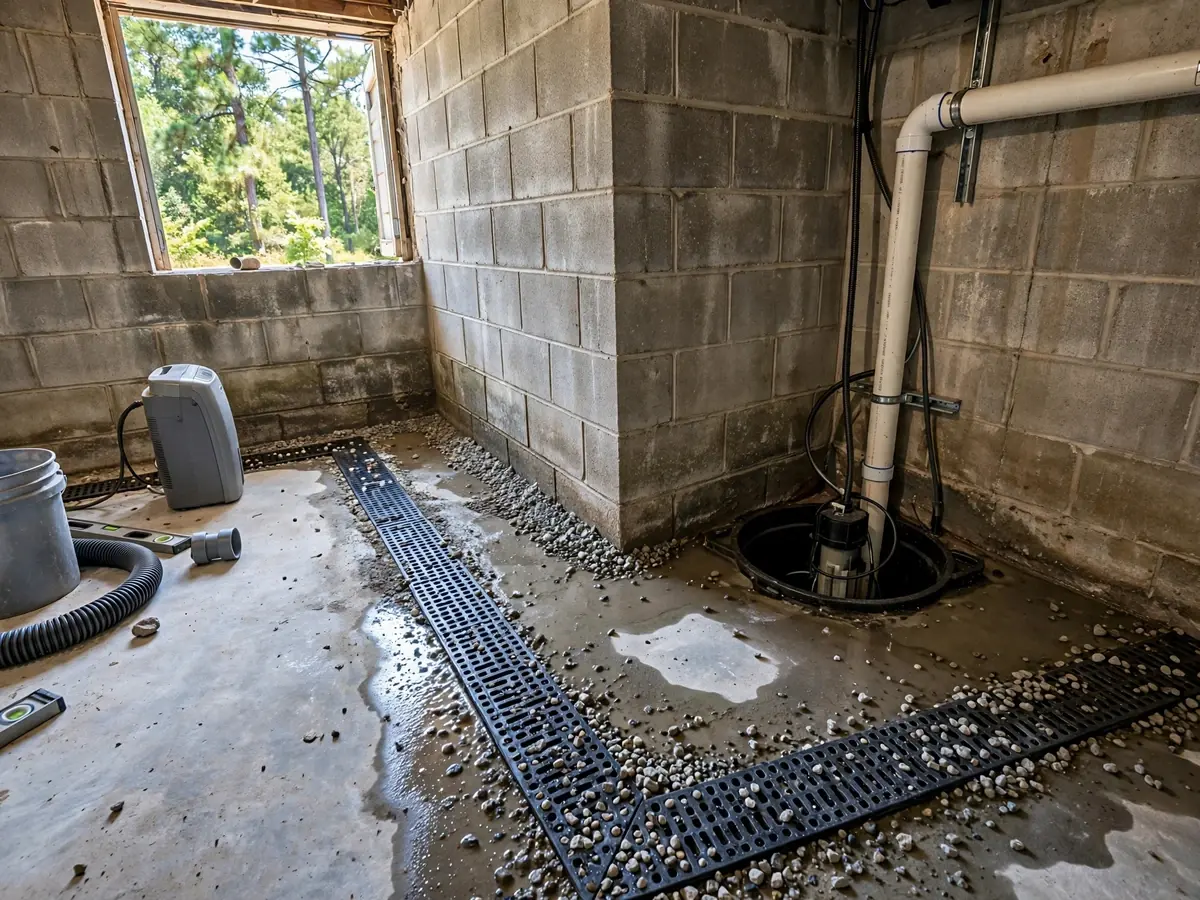
Water in a basement comes from outside, from plumbing or from both. Call (385) 488-1892 to book an inspection. If water is actively flooding the basement tonight, the same line takes emergency calls 24/7, and the sump pump page covers the emergency steps.
Where the water comes from
| Source | Clue | Typical fix |
|---|---|---|
| Surface runoff | Water after storms along one wall | Regrade, extend downspouts, fix window wells |
| Groundwater pressure | Seepage at the wall-floor joint | Interior drain and sump pump |
| Wall cracks | Visible cracks that weep after rain | Crack injection and drainage |
| Plumbing leaks | Wet spot with no rain connection | Leak trace. See leak detection |
| Condensation | Damp on cold walls in humid months | Dehumidify, ventilate, insulate pipes |
We start by ruling out plumbing. A slab leak or a failing sewer line can mimic a seepage problem, and no drain system fixes a broken pipe. If the leak is plumbing, we fix it. If not, we map the water path and recommend drainage.
Waterproofing options
Interior drainage
- Captures water at the footing and routes it to a sump pit
- Works from inside the finished basement
- Needs a reliable pump and backup
- Does not stop water from entering the wall
Exterior work
- Excavates and seals the foundation wall
- Stops water before it hits the wall
- Costs more and disturbs landscaping
- Best for repeated wall leaks
Draper conditions that push water toward foundations
Draper sits at the base of the Wasatch Range, and snow lingers from November to March. Fast meltwater can saturate soil around foundations. Late-summer monsoon storms in July and August can add a sudden load. WaterPro typically runs secondary irrigation water from about April 15 to October 15, and heavy lawn watering next to a foundation wall can add to the groundwater load.
Draper's water element reports that outdoor use is a large share of demand, which means watering habits near the house deserve attention. Direct sprinkler heads away from the foundation and keep downspouts discharging several feet from the wall.
Basement seeping now?
Call the 24/7 line. We handle active water first, then plan the permanent fix.
What a visit includes
Walk the property
We check grading, downspouts, window wells and the foundation outside.
Inspect inside
We look for cracks, efflorescence, moisture meter readings and the sump pit.
Rule out plumbing
Meter test and a look at supply and drain lines.
Recommend a plan
You get options in order of cost and urgency.
Permits and discharge
Sump discharge must go outdoors, away from the foundation and not to the sewer. Ask the Draper Building Division, (801) 576-6399, about local rules. Call 811 before any exterior digging.
What changes the price of basement waterproofing
Homeowner policies often exclude groundwater seepage and foundation leaks. Ask your agent about any water backup endorsement. Want your real number? Call (385) 488-1892.
What to do before the inspection visit
- Move stored boxes and electronics away from the walls where water appears.
- Do not enter standing water near outlets, a panel or a furnace. Call the power company if you are unsure.
- Photograph the wet areas with a date, and note the weather.
- Take a meter reading with all water off, so we can rule out a plumbing leak.
- Do not seal walls with paint before the cause is known, since it can hide the problem.
Sources and standards behind this page
Drainage work that touches plumbing follows the International Plumbing Code (IPC) as amended by the Utah State Construction Code in Utah Code Title 15A. Permit questions go to the Draper Building Division at (801) 576-6399. Irrigation timing comes from WaterPro, and the outdoor share of Draper demand comes from the city's water element.
Straight Answers
Yes. Call (385) 488-1892 any hour. We stop active flooding first and plan the permanent fix on a later visit.
No. A sump pump removes water that collects. Waterproofing is the larger plan that controls where water goes, and often includes a pump.
Condensation appears on cold surfaces in humid weather and dries with ventilation. A leak appears after rain or snowmelt, or runs steadily.
Often. An interior drain and sump collect water at the footing. Some wall leaks need exterior work.
It stops the moisture that feeds it, but existing mold may need separate cleanup.
Interior systems often take a few days. Exterior excavation takes longer, and we give a timeline after the inspection.