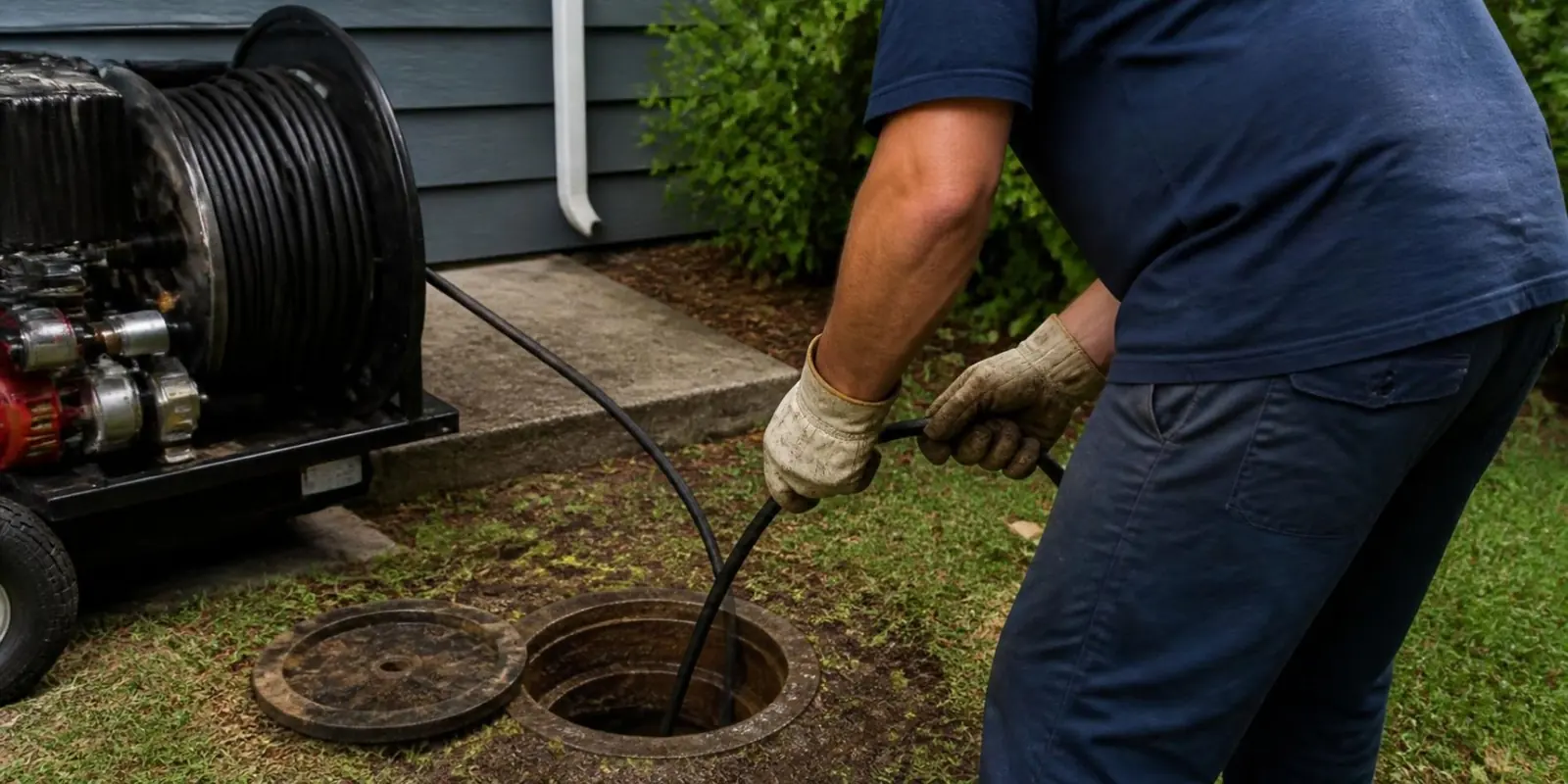
A sewer backup is usually caused by roots, grease, a collapsed or sagging pipe or something flushed that should not have been. The quickest way to narrow it down is to see which fixtures are affected and how fast the problem developed. If several drains are slow and the lowest one gurgles, stop using water and call (385) 488-1892. A plumber with a main line cable machine can usually come the same day.
Read the symptoms
| Pattern | Probable cause | First action |
|---|---|---|
| One fixture slow, the rest fine | Branch or trap clog | Plunge, then a hand auger. Not a main line issue |
| Several fixtures slow together | Partial main line blockage | Stop adding water, call a plumber |
| Lowest drain gurgles when you flush upstairs | Air displaced by a blockage ahead of it | Stop all water use and call |
| Backup right after heavy laundry | Narrowed pipe with little spare capacity | Camera inspection recommended |
| Sudden full backup with no warning | Collapse, foreign object or a district main problem | Check neighbors, call a plumber and the district |
The five usual suspects
Tree roots
Roots enter at joints looking for moisture and grow into a mat that catches paper. Backups often start in the growing season.
Grease and soap buildup
Fats cool in the pipe and form a layer that narrows the bore until something plugs it.
Sagging pipe
A low spot holds water and solids. Backups recur after cleaning.
Broken or offset joints
Soil can wash in and roots follow.
Flushed items
Wipes, hygiene products and paper towels do not break down like toilet paper.
Draper note: who owns what in a sewer backup
South Valley Sewer District, at (801) 571-1166, serves Draper, Riverton, Bluffdale, South Jordan, Herriman and other cities. Its crews work on the district main. The pipe from your house to that main is often your responsibility, but the district can confirm where its work ends. The Draper City website suggests using its Utility Services App to find your provider.
If several homes on the street back up at once, the blockage is likely in the main. Tell the district. If only your house is affected, hire a plumber and ask for a camera recording so you can show where the blockage sat.
What to do in the first hour
Stop using water
No flushing, laundry or dishwasher. Every gallon needs somewhere to go.
Skip the chemicals
Drain cleaner does not clear a main blockage and is hazardous to the plumber.
Find the cleanout
A capped pipe near the foundation, in the garage or in the basement. Clear a path to it.
Protect floors and belongings
Lift rugs and boxes. Wear boots if you need to walk through affected areas.
Call a plumber
Tell the dispatcher which fixtures are affected and how quickly it developed.
How a plumber clears and diagnoses it
A cutting-head cable clears most blockages. A camera then shows why the line blocked. If the pipe is sound and coated with buildup, hydro jetting cleans the wall. If the camera finds a break or sag, the next step is sewer line repair. Our sewer line cleaning page covers the visit in more detail, and sewer camera inspection explains the video report.
Ask for the video. It is useful for your own records, for a conversation with the district and for an insurance claim. A line that was clear last month and blocked this month is a different story from a line that has needed cleaning three times this year.
Drains gurgling?
Call now. We clear the line and run a camera to find the cause.
Warning signs you can catch early
Backups rarely arrive without a rehearsal. A tub that drains a little slower than it used to, a toilet that gurgles after the washer drains and a faint sewage smell near a basement floor drain all show up weeks before the main plugs.
Treat those as an invitation to schedule a camera look, not as background noise. Early cleaning is a smaller job than an emergency at midnight, and the video often shows whether roots or a sag are the real story.
Who pays?
Your homeowners policy may or may not include sewer backup. Many policies treat it as an optional endorsement. Check your policy wording before you need it. Photograph the damage before cleanup, and save receipts.
If the district caused the blockage in its main, ask the district about its claims process. If the cause is on your property, repair costs fall to you. This is why identifying the location with a camera is worth doing.
Keep notes on every event: the date, which drains were affected and what the plumber found. A pattern, such as backups every August, points to roots or irrigation-driven growth, and that pattern shapes the long-term fix.
How to prevent the next one
Habits that keep a sewer line healthy
- Flush only toilet paper and human waste.
- Keep fats, oils and grease out of drains. Wipe pans before washing.
- Know where your cleanout is and keep it accessible.
- If trees grow near the line, schedule a camera look every few years.
- Do not plant large-rooted trees over the sewer lateral.
- Call a plumber at the first sign of gurgling instead of waiting.
Draper City says unprotected hoses and sprinklers can create cross-connections, which is a drinking water issue and not a sewer one. But the same attention to what goes into your pipes pays off on both sides.
Sources and standards behind this page
Service-area details for South Valley Sewer District come from the district. Repairs that follow a camera finding follow the International Plumbing Code (IPC) as amended by the Utah State Construction Code in Utah Code Title 15A. The Draper City website suggests its Utility Services App for provider lookups.
Straight Answers
Tree roots, grease buildup, a sagging or broken pipe and flushed items such as wipes. A camera shows which one you have.
If several neighbors are affected, call South Valley Sewer District at (801) 571-1166. If only your home is affected, call a plumber. Either way, stop using water.
It is not recommended. The product sits in standing water, rarely clears a main blockage and can burn skin when a plumber opens the line.
Many policies do not cover it unless you added a sewer backup endorsement. Read your policy and ask your agent.
Slow drains that worsen over months, backups in the growing season and root fibers on the cable are common signs. A camera confirms it.
Yes. Call (385) 488-1892 any hour. We send a plumber with a main line cable machine.