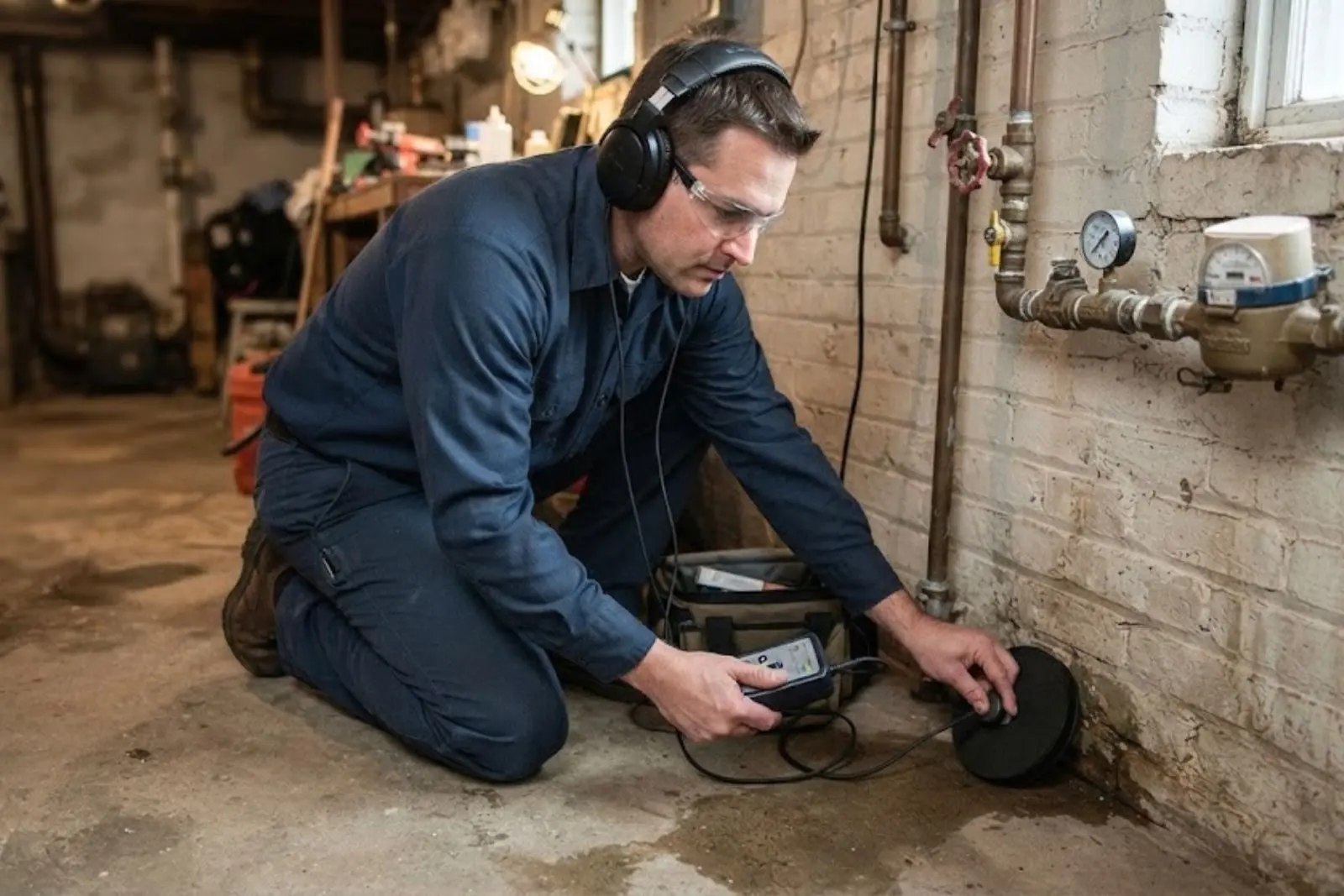
Shut off every tap and appliance, then read your water meter. If the leak indicator or the small dial moves, water is escaping somewhere after the meter. That single test separates an invisible leak from a high bill caused by use. If the meter keeps moving and you cannot find the source, call (385) 488-1892 and we will trace it with listening gear and thermal imaging.
Step one: the meter test
Turn everything off
Close taps, stop the washer and dishwasher, turn off the ice maker and pause any sprinkler or irrigation that draws from the house line.
Read the meter
Note the number or the position of the small leak-indicator dial. Take a photo.
Wait fifteen minutes
Do not use any water.
Read again
If the number or dial moved, water is escaping. If it did not, the leak is intermittent or the use was real.
Close the main valve and test again
If the meter stops, the leak is inside the house. If it keeps moving, the leak is in the service line between meter and house.
Step two: the easy suspects
Toilets
Drop food coloring in the tank. If color shows in the bowl after fifteen minutes without a flush, the flapper leaks.
Faucets and under-sink lines
Dry the cabinet floor and the supply lines with a paper towel and check for wet spots.
Water heater
Look at the base, the fittings and the relief valve discharge.
Outdoor spigots and sprinkler lines
A leak that starts after the irrigation season begins often traces to a split line.
Appliance hoses
Check behind the washer and dishwasher.
Draper note: check which water you are measuring
Draper's water element reports that outdoor use is about 63% of demand, and much outdoor watering runs on a separate secondary irrigation system. That system is not your culinary meter. If your culinary meter is quiet and your yard is wet, the leak may be on the secondary side and the provider, WaterPro in much of Draper, is the right call.
Draper has also been installing AMI meters with EyeOnWater leak tracking. If your account has one, the portal may show continuous flow overnight, which points to a leak. Ask Draper City or your provider whether the feature is available at your address.
Step three: look for signs a meter test cannot show
| Clue | What it suggests | Next step |
|---|---|---|
| Warm spot on the floor | Hot water line leaking under a slab | Water heater off, call for acoustic detection |
| Stain on the ceiling below a bathroom | Supply or drain leak above | Check tub and shower seals, then call |
| Musty smell with no visible source | Moisture behind a wall or under flooring | Moisture meter and thermal scan |
| Bubbling or lifting floor | Water under the finish | Shut off the main, call a plumber |
| Green or lush patch in the yard | Buried line leak | Call 811, then trace the service line |
| Hissing in the wall | Pressurized pipe leaking | Close the main and call |
What a professional adds
Acoustic ground microphones pick up the sound of water escaping a pressurized pipe. A correlator uses two sensors to locate it along the pipe. Thermal cameras show temperature changes that betray a hot line or damp insulation. A pressure test isolates a section. Together, they usually narrow a leak to a small spot so the repair is a hole the size of a dinner plate instead of a torn-up room.
Our leak detection page describes the visit. If the leak turns out to be in the line from the street, water line repair explains the options. A burst that has already started is a burst pipe repair job.
Think you have a leak?
Call to book a leak trace with listening gear and thermal imaging.
Common hiding places for leaks
Leaks favor spots you rarely look at. Water supply stops behind the toilet, the flexible connectors under a bathroom vanity, the ice maker line behind the refrigerator and the washing machine hoses are all common.
Slab leaks hide longer because the pipe is buried in concrete. Attic leaks from a roof penetration or an air conditioning condensate line can be mistaken for plumbing. A flashlight, a dry paper towel and ten minutes in these places solves a surprising number of mysteries.
Do the check on a quiet night when the house is still. Many pinhole leaks hiss faintly, and the sound carries when nothing else is running. Put your ear to the wall near the water heater and the main entry, since a pressurized pipe leak sounds like a soft rushing hiss.
Keep a simple leak log
Write down the meter reading each morning for a week. A reading that rises with no one home points to a leak, and the pattern tells a plumber whether it is steady or intermittent.
A steady loss at a constant rate suggests a pressurized line. A loss that starts and stops suggests a toilet, an irrigation valve or an appliance cycling. That kind of detail shortens the diagnostic visit and gives the technician a place to start.
What to do once you find it
After the leak is located
- Shut off the water to that section, or the main if you cannot isolate it.
- Photograph the damage for insurance.
- Dry the area with fans and a dehumidifier.
- Call a plumber for a permanent repair.
- Ask the plumber to check nearby pipes of the same age.
A leak behind a wall also deserves a look for mold. If the wall stayed wet for more than a day or two, a restoration company can test and dry it.
Sources and standards behind this page
According to Draper's water element, outdoor use is about 63% of demand and the city has been installing advanced meters with leak tracking. Utah Code 73-10-34 requires secondary connection metering by January 1, 2030.
Straight Answers
Turn off all water use, note the meter reading, wait fifteen minutes and read again. Movement means water is escaping after the meter.
Put a few drops of food coloring in the tank and wait fifteen minutes without flushing. Color in the bowl means the flapper is leaking.
Usually. Acoustic listening and a warm-spot check can locate the leak, so the dig is small and in the right place.
Utah Code 73-10-34 requires secondary connections to be metered by January 1, 2030, with the duty on suppliers. Ask WaterPro or your provider about your account.
Some policies cover access and tear-out for a covered leak. Ask your agent before work begins.
Yes. Call (385) 488-1892 any hour. Close the main valve while you wait.