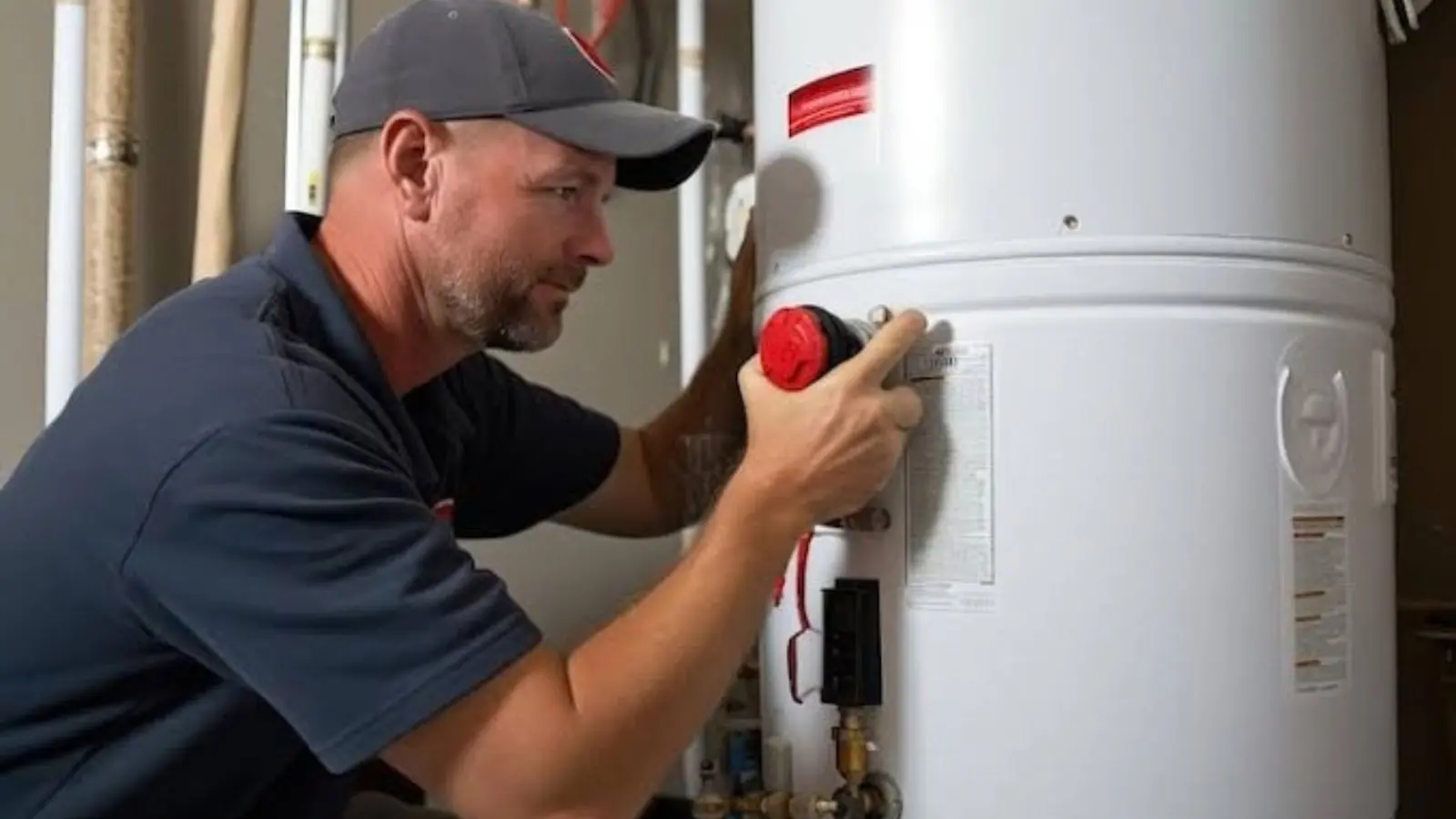
Most tank water heaters last roughly eight to twelve years, and tankless units commonly last longer when maintained. The range is wide because water quality and maintenance change the outcome. If your heater is near the end of that window or shows warning signs, plan ahead rather than waiting for a flood. Call (385) 488-1892 to talk through repair versus replacement.
What decides how long a heater lasts
| Factor | Effect | What you can do |
|---|---|---|
| Water hardness | Scale insulates the bottom of the tank and strains elements or burners | Flush yearly, consider a softener |
| Anode rod condition | The rod corrodes first so the tank does not | Check it every few years and replace it |
| Water pressure | High pressure stresses the tank and relief valve | Test pressure, add a regulator or expansion tank |
| Usage | Heavy use means more heating cycles | Match tank size to the household |
| Installation quality | Poor venting, no drain pan or loose connections shorten life | Hire a licensed plumber |
| Location | Cold garages and damp closets add stress | Insulate and keep the area dry |
Warning signs that the end is near
Rust-colored hot water
A clear cold tap with rusty hot water suggests the tank is corroding inside.
Rumbling and popping
Sediment baked onto the bottom boils under the burner or around the element.
Moisture at the base
Even small leaks at the tank body mean it is time to plan a replacement.
Running out faster
Lower capacity from sediment or a failed element.
Age past ten years
Not a failure by itself, but a prompt to inspect and plan.
Draper note: what the local water does to a tank
Draper City's 2022 water quality report lists total hardness from 16 to 357 mg/L across its sources. At the very hard end, scale builds quickly. A tank in a very hard area may need yearly flushing to reach the long end of its life.
Draper also gets real winters. Snow can sit from November to March, and incoming water is cold. A heater in an unheated garage works harder in January. Insulating the tank and the first few feet of pipe is a small cost that helps.
Tank versus tankless lifespan
Tank heater
- Roughly eight to twelve years
- Fails by leaking when the tank corrodes
- Lower upfront cost
- Replacement is a few hours
Tankless heater
- Often rated for a longer life with maintenance
- Fails by scale in the heat exchanger
- Higher upfront cost
- Needs yearly flushing, especially in hard water
If you are thinking about changing type, read about tankless water heaters and planned installation before deciding. A planned install lets you choose the location and details instead of rushing at midnight.
Should you repair or replace?
Check the age
The data plate lists a serial number that encodes the manufacture date. Ask the plumber to decode it.
Find the failure
A bad element or thermocouple on a decade-old heater is often worth repairing once. A leaking tank is not.
Compare costs
If the repair costs close to a new unit, replacement gives you a new warranty.
Think about the next ten years
If your household changed, choose a size that fits the new reality.
For failures that need quick action, see water heater repair. If the tank is already leaking, the faster route is replacement.
Is your heater aging?
Call for an honest assessment. We will tell you whether to repair or replace.
Planning ahead beats a midnight replacement
A heater does not usually announce its failure on a convenient day. The leak that starts at the bottom seam tends to show up on a weekend, with the family home. If your unit is past ten years, take ten minutes to write down its size, fuel type and location, photograph the data plate and decide where you want it. When the day comes, that information shortens the call and speeds the swap.
It also helps to know your budget range before you need one. A planned replacement lets you compare standard efficiency with higher efficiency models and pick a warranty that fits how long you plan to stay in the house. An emergency replacement is still possible and we do it often, but a planned one gives you choices.
Utah rules for the new heater
Utah amends the model plumbing code, and one amendment requires a water heater to be anchored or strapped. Another requires the pan drain to be individually trapped and vented, and treats the pan as an emergency receptor. Ask the Draper Building Division at (801) 576-6399 whether your job needs a permit, and check that your plumber is licensed on the state Division of Occupational and Professional Licensing site.
One more habit helps. Write the install date on the tank with a marker the day it goes in. Years later, nobody has to decode a serial number to learn how old it is.
Why age alone is not the verdict
A fifteen-year-old tank in a soft-water home with a recent anode rod can outlast a six-year-old tank that has never been flushed in very hard water. Look at the whole picture: the age, the water, the maintenance record and whether anything is leaking. A plumber who opens the access panel and looks at the elements, the burner and the tank bottom can tell you more in ten minutes than a calendar can.
Maintenance that gets you to the long end
Yearly routine
- Drain a few gallons from the tank to clear sediment.
- Test the temperature and pressure relief valve.
- Inspect the anode rod every few years.
- Check for moisture at fittings and the base.
- Keep the area around the heater clear and dry.
Sources and standards behind this page
Lifespan ranges are general industry figures, not a guarantee for your unit. Installation rules cited here come from the International Plumbing Code (IPC) as amended by the Utah State Construction Code in Utah Code Title 15A. Hardness data come from Draper City's 2022 water quality report.
Straight Answers
Roughly eight to twelve years, depending on water quality, maintenance and installation. Hard water tends to shorten that range.
Look at the data plate. The serial number usually encodes the manufacture date, and a plumber can decode it for you.
Sometimes. A single part failure on a sound tank can be worth fixing. A leaking tank is not worth patching.
It can. Draper City reports total hardness up to 357 mg/L at some sources. Yearly flushing and a softener help.
They are commonly rated to last longer, but they need regular descaling, especially with hard water.
Often yes. Call (385) 488-1892 and we line up a replacement for the same visit when a unit is available.